

The question of what the difference is between the ballistic protection classes, the American NIJ standard and the German Technical Guideline for Ballistic Protective Vests (TR) is asked again and again.
At first glance, there are many similarities:
5 protection levels and partly similar calibers. However, there are also a number of differences that are not immediately apparent. It cannot be said across the board that the NIJ standard or the German TR is better. It depends much more on which threat situation the wearer is facing and which features he wants to prioritize. Is multi-hit protection or protection for large caliber prioritized? Low weight or trauma reduction?
Depending on the requirements, a different ballistic standard is recommended. To clear up any confusion, this blog post will look at the two ballistic standards, explain their special features and hopefully help you find the right ballistic standard for your requirements.
Ballistic protection class NIJ Standard 0101.06
NIJ Standard is the ballistic standard of the American National Institute of Justice. It has been the only nationally accepted standard in the USA since 1972 and has also established itself as the leading standard worldwide. The aim of the NIJ standard was to determine the minimum performance of ballistics and to establish these minimum requirements.
The NIJ Standard 0101.06 is the current American standard from 2008 and is divided into 5 protection classes:
Type IIa, Type II, Type IIIa, Type III and Type IV.
- NIJ IIa : Protection against bullets from “common” handguns
- NIJ II : Protection against bullets from handguns
- NIJ IIIA : Protection against bullets from all handguns and submachine guns
- NIJ IIII : Protection against normal bullets from long guns NIJ IV : Protection against hard core bullets from long guns
The ballistic requirements of the classes are as follows:
| Type | Caliber | Projectile type | Mass | Speed |
|---|---|---|---|---|
| IIa | 9 x 19 mm .40 S&W | Full Metal Jacketed | 8,00 gram | 373 +/- 9.1 m/s |
| II | 9 x 19 mm | Full Metal Jacketed | 8,00 gram | 398 +/- 9.1 m/s |
| .357 Magnum | Jacketed Soft Point | 6,00 gram | 436 +/- 9.1 m/s | |
| IIIa | .357 SIG (9 x 22 mm) | Full Metal Jacketed Flat Nose | 8,1 gram | 448 +/- 9.1 m/s |
| .44 Magnum | Semi Jacketed Hollow Point | 15,6 gram | 436 +/- 9.1 m/s | |
| III | .7.62 x 51 mm (M80) | Steel Jacketed | 9,6 gram | 847 +/- 9.1 m/s |
| IV | 7.62 x 63 mm (M2 AP) | Armor Piercing | 10,8 gram | 878 +/- 9.1 m/s |
NIJ Testing Procedures: How Ballistic Vests Are Tested
The National Institute of Justice (NIJ) standard outlines a clear procedure for testing ballistic vests—depending on the protection level and the type of ammunition.
Firing Angle and Number of Shots
For protection classes IIa through IIIa, the NIJ testing procedure specifies a total of 6 shots per ballistic insert:
- 4 shots are fired head-on at a 0° angle (the so-called NATO angle).
- One shot each at 30° and 45° strikes the insert diagonally from the side.
Starting with Protection Class III, firing takes place exclusively at a 0° angle:
- 6 shots for Level III
- 1 to 6 shots for Level IV (depending on ammunition and configuration)
Firing Distances
The firing distances vary depending on the protection level:
- For Types IIa through III, shots are fired from a distance of 5 meters.
- For Type IV, the distance is 15 meters.
Additional Tests: Wet Test and Wear Test
In addition to the ballistics test, climate stress tests are also conducted for Classes IIa through IIIa—in particular, the so-called wet test:
In this test, the ballistic insert is submerged vertically in water at 21 °C for 30 minutes and then allowed to drain for 10 minutes.
The purpose of this test is to verify the protective performance under wet conditions. The insert must not show any decline in performance after exposure to water—a critical factor for real-world use under adverse conditions.

Technical Guideline TR: The German Standard for Ballistic Body Armor
The Technical Guideline for Ballistic Body Armor (TR) is the ballistic standard in Germany. The police and the German Armed Forces procure their ballistic protective equipment based on the TR. The technical guideline has been in existence since 1979 and is an established standard, particularly in German-speaking countries. However, it has never achieved the same level of widespread adoption as the American NIJ standard. As a result, the TR is considered a niche standard internationally. Nevertheless, the German standard has several distinctive features that should not be underestimated.
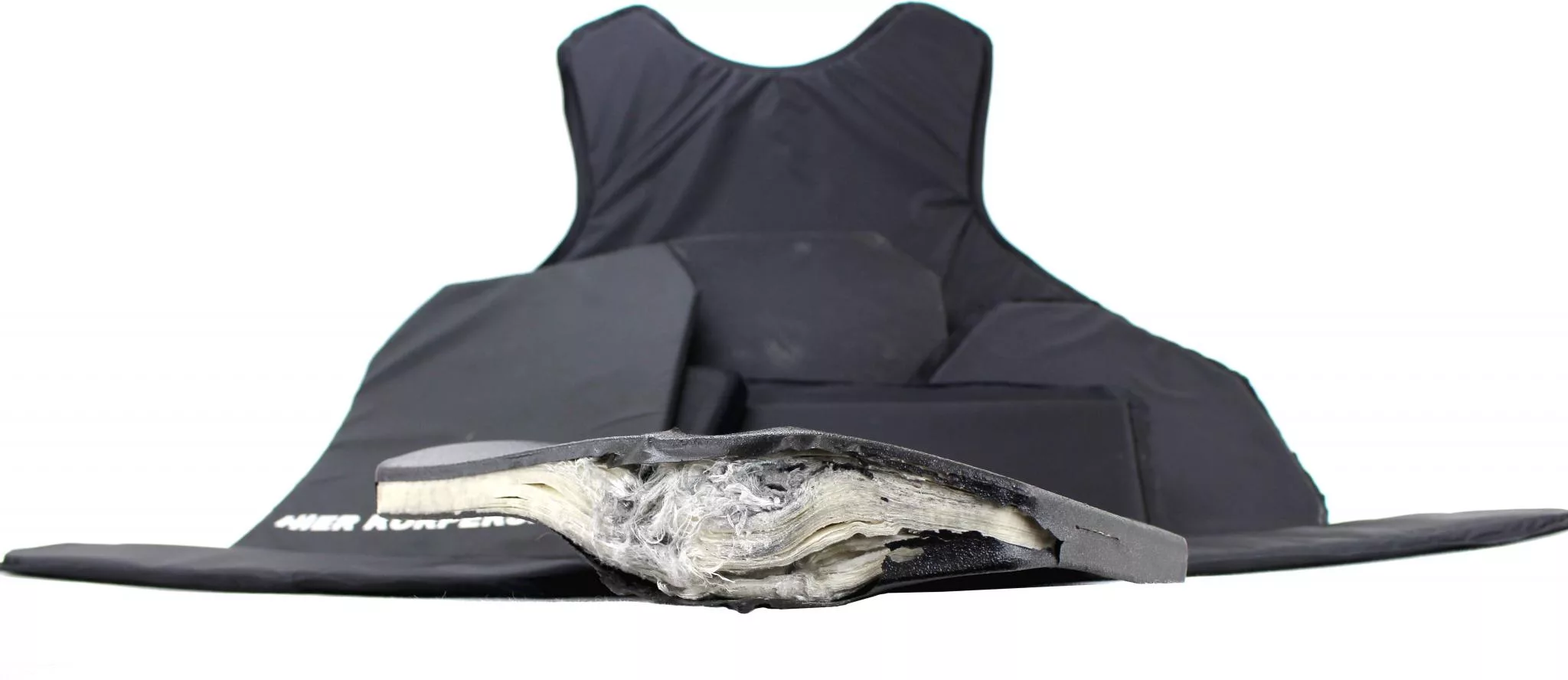
Ballistic Protection Class TR – Technical Guideline for Protective Vests
The Technical Guideline for Ballistic Protective Vests (TR)—like the American NIJ Standard 0101.06—dates back to 2008. It also divides ballistic protective vests into five protection classes, but differs from the NIJ Standard in that each class in the TR includes a specific definition regarding the threat scenario and type of ammunition.
An overview of the TR protection classes:
- Class L: Protection against projectiles from “standard” handguns. This class is primarily designed to protect against common, low-energy pistol ammunition.
- Class 1: Protection against projectiles from submachine guns. This class accounts for the higher energy output of automatic handguns.
- Class 2: Protection against projectiles from all handguns. This class provides enhanced protection against higher-powered pistol ammunition.
- Class 3: Protection against standard projectiles from long guns. This class is designed for threats posed by hunting rifles or assault rifles using conventional ammunition.
- Class 4: Protection against hard-core projectiles from long guns. This class offers protection against armor-piercing or specialized military ammunition with particularly high penetrating power.
The TR is partially based on the classifications of the NIJ standard but places greater emphasis on mission-specific requirements within the context of German law enforcement and security agencies.
The ballistic requirements of the classes are as follows:
| SK | Caliber | Projectile type | Mass | Speed |
|---|---|---|---|---|
| L | 9 x 19 mm | Steel full sheath, round head, lead soft core, tin-plated | 8,00 gram | 360 m/s +/- 10 m/s |
| 1 | 9 x 19 mm | Steel full sheath, round head, lead soft core, tin-plated | 8,00 gram | 415 m/s +/- 10 m/s |
| QD-PEP II/S (Special police storey) | 6,00 gram | 460 m/s +/- 10 m/s | ||
| Action 4 (Special police storey) | 6,10 gram | 460 m/s +/- 10 m/s | ||
| 2 | .357 Magnum | Solid brass, taper point head | 7,10 gram | 580 m/s +/- 10 m/s |
| 3 | .223 Remington (5,56 x 45 mm) | Steel full jacket, pointed head, lead soft core with steel penetrator | 4,00 gram | 950 m/s +/- 10 m/s |
| .308 Winchester (7,62 x 51 mm) | Steel full jacket, pointed head, lead soft core | 9,55 gram | 830 m/s +/- 10 m/s | |
| 4 | .308 Winchester (7,62 x 51 mm) | Steel full jacket, pointed head, lead soft core | 9,70 gram | 820 m/s +/- 10 m/s |
TR Test Procedures: Firing Angles, Distances, and Direct-Contact Firing in Detail
For protection classes SK L through SK 1, the Technical Directive stipulates a comprehensive test procedure involving multiple firing angles and distances. First, four shots are fired head-on (0°) at the ballistic insert. This is followed by angled firing with three shots at 65°. In addition, a so-called “contact firing” is performed, also with three shots at a 0° angle, whereby the barrel is placed directly against the insert.
An exception is firing with police ammunition—in this case, the contact shot is omitted.
Starting with protection classes SK 2 through SK 4, the scope of testing is reduced to three shots each at 0° and 65°. In these classes, the “contact” test is no longer performed.
A separate ballistic insert is used for each firing angle. Multiple shots are not fired at the same test specimen—0° and 65° tests are always conducted separately.
The firing distance is:
- 5 meters for SK L through SK 2 (excluding supported shots)
- 10 meters for SK 3 and above
A distinctive feature of the SK L and SK 1 is the supported shot. In this test, the barrel is pressed directly against the insert with a force of 10 kilograms, and three shots are fired. This test simulates an extreme close-range scenario, such as during a physical struggle. Due to their design, not all protective vests are capable of withstanding such stresses without damage—which is precisely why this test is part of the lower protection levels.
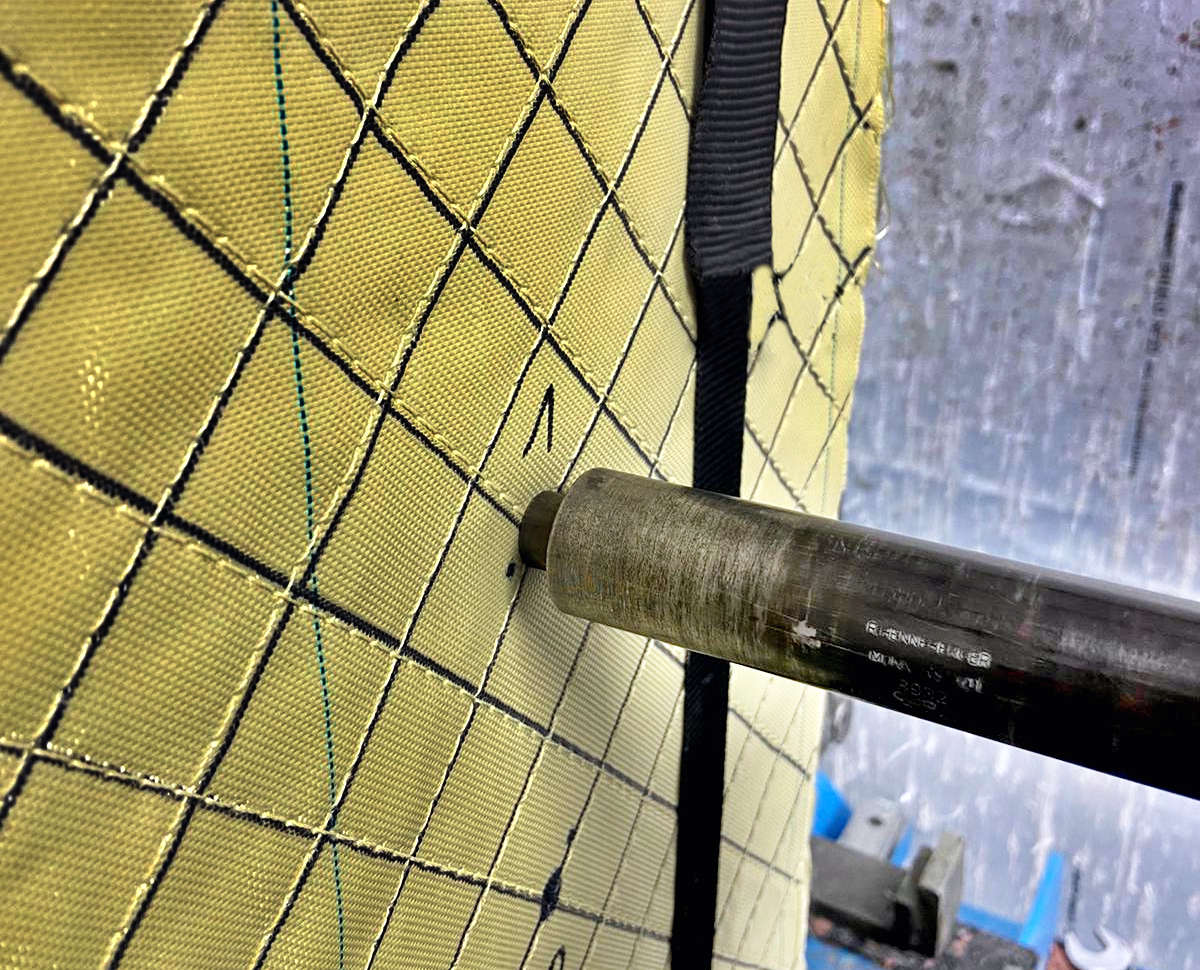
Abrasion Test in the TR Testing Procedure for Ballistic Protection Vests
The Technical Guideline (TR) for the German testing procedure places particular emphasis on assessing the abrasion resistance of soft ballistic protection. To this end, specific environmental stress tests are required to simulate real-world conditions and put both the material and workmanship to the test.
First, the test samples are conditioned. To do this, one insert is stored in a climate chamber for 16 hours under each of the following conditions:
- at -20 °C (cold test),
- at +20 °C and 65% relative humidity (normal climate),
- and at +70 °C (heat test).
- The samples are stored either standing upright or suspended to ensure realistic stress conditions.
This is followed by the actual wear test: The insert is conditioned for at least 16 hours at +40 °C and a relative humidity of 90–95%. A distinctive feature of this test is that moisture-repellent covers must be removed beforehand—even if the ballistic insert is factory-sealed. This exposes the material directly to extreme climatic conditions. This procedure allows for a realistic assessment of the material’s resistance to aging and overall quality under extreme conditions.
According to TR, the service life of ballistic protective vests is defined as up to 10 years. The wear test is a crucial component in verifiably demonstrating this durability.
TR Protection Class Explained: Different Trauma Values for Covert and Overt Protective Vests
The Technical Guideline (TR) on ballistic protection distinguishes between two types of protective vests when evaluating the so-called trauma value: covert vests and overt vests.
Covert Vests – Higher Trauma Value Permitted
Covert vests are worn concealed under clothing and thus lie closer to the body. Because of this method of wear, the TR permits a maximum trauma value of 40 mm for this type of vest. The basis for this is derived from the American NIJ standard, but is supplemented in the TR by a different tactical assumption:
The primary purpose of the covert vest is to enable the wearer to safely exit a hazardous situation, not to ensure the wearer’s full operational capability after being struck.
Overt Vests – Lower Trauma Value for Full Operational Readiness
Overt protective vests are worn over clothing, such as a uniform, and are designed specifically for tactical personnel such as soldiers, police special units, or security services.
Here, the TR standard specifies a significantly lower maximum trauma value of 22 mm. The reason: These vests are designed to maintain the wearer’s operational readiness even after being struck. A lower trauma value reduces the risk of internal injuries despite the vest’s ability to stop penetrating projectiles.
No Stab Protection Included in the TR Standard
Important: As with the NIJ standard, the TR standard does not include an integrated stab protection test. Stab protection must be tested separately in accordance with a separate stab protection standard.
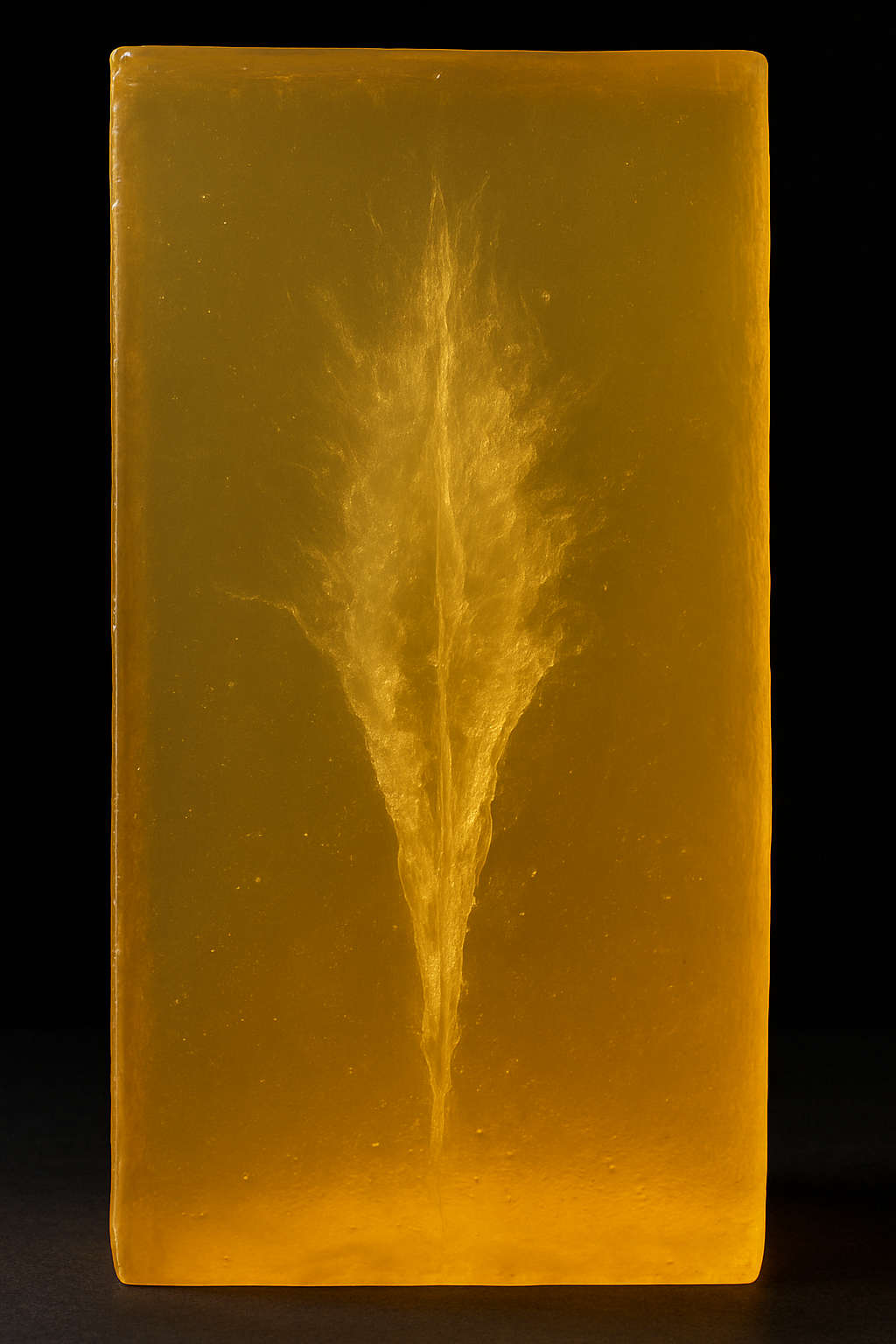
Summary of ballistic protection classes
Now that both ballistic standards have been presented, the question arises as to where the main differences lie. Basically, it can be said that the German standard tests more threat scenarios. The NIJ standard does not include both the mounted shot and the firing of special police bullets.
Instead, the American standard tests with large calibers with a high man-stopping effect.
Although smaller calibers and lighter bullets are used on the German side, these are more aggressive in terms of penetration. On the German side, steel full metal jacket projectiles are already being tested from SK L upwards, while only normal full metal jacket projectiles are used on the American side. Further ammunition with high penetration power will follow on the German side.
Furthermore, an SK 4 is tested with 3 shots, while Level IV only has to withstand 1 shot. Level IV, on the other hand, protects against the significantly more powerful 7.62 x 63 mm caliber.
For trauma protection, the NIJ standard allows a maximum of 44 mm across all types. Under German standards, a trauma value of 40 mm is permitted only for SK L and SK 1. SK 2, 3, and 4 are designed as overt protection vests. As a result, only a trauma value of 22 mm is permitted for these.
In terms of wear resistance, both standards are on a par despite different test methods. Both standards guarantee durability and high robustness of the vests.
In conclusion, it can be said that the NIJ standard is recommended for wearers who are looking for protection against the largest possible caliber with average projectiles. A lower dream value and multi-hit protection at level IV are of secondary importance.
For those who want to protect themselves against as many threat scenarios as possible and are looking for protection against aggressive projectiles, the Technical Guideline is recommended. The technical guideline is also suitable for those who value low trauma and want multi-hit protection in the SK 4 range.
Ballistic inserts and corresponding covers such as plate carriers and vests are available in the Zentauron online store.
Article written by C. Wächter