
What are the benefits of trauma protection?
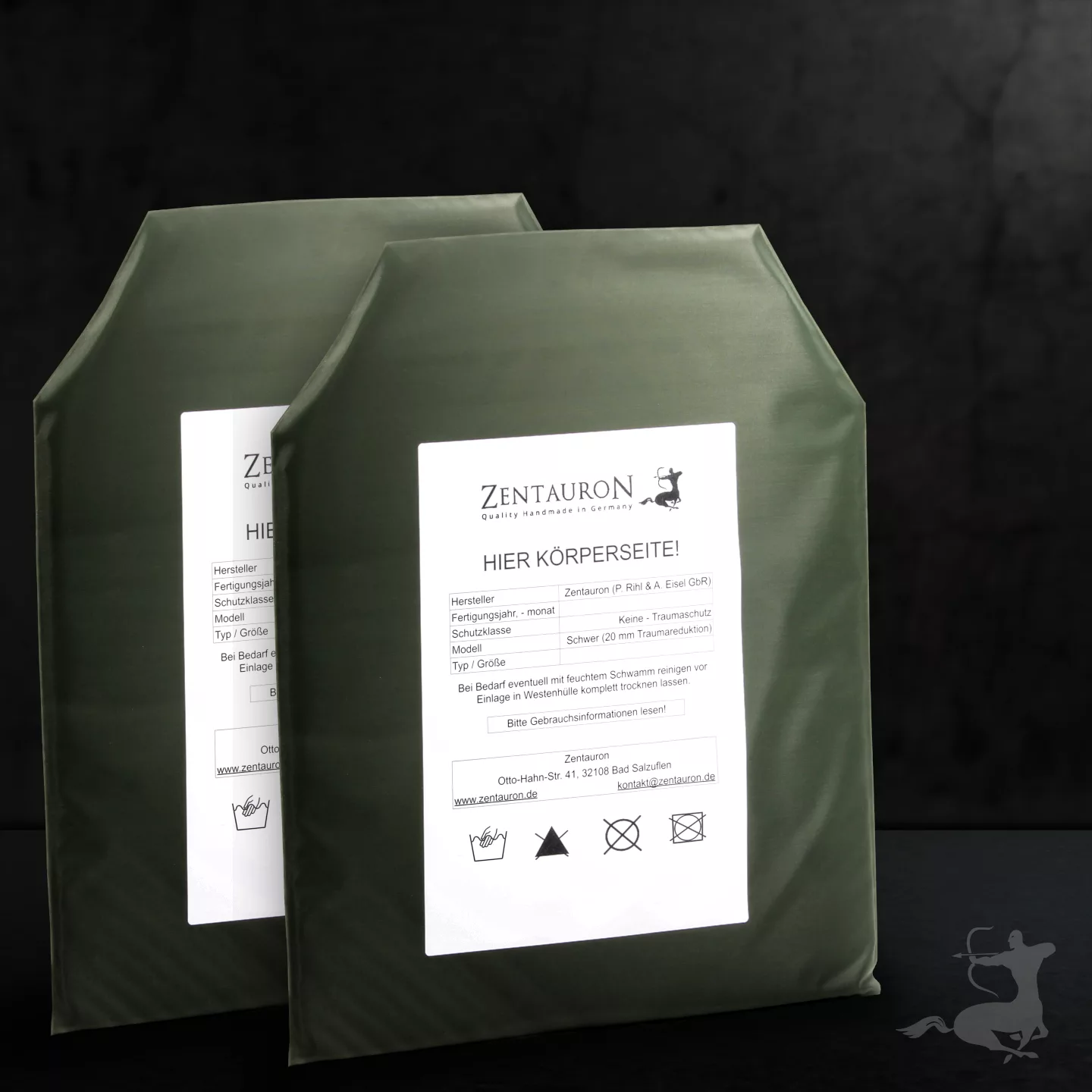
Trauma protection is an essential item for anyone wearing a plate carrier or protective vest. This insert is specially designed to minimize blunt trauma caused by hard blunt objects and to reduce or completely prevent injuries. This is especially true in combination with ballistic inserts, as, depending on the ballistic structure, considerable forces can act on the body and cause serious injuries. Even if the projectile does not penetrate the vest, very thin vests that are worn concealed can cause rib fractures, ruptured spleens and other serious injuries, which can even be fatal in some cases. Trauma protection can mitigate this stress and thus increase the wearer’s chances of survival. It also increases the likelihood that you will remain capable of acting, which is another major advantage in situations where you are under fire.
In this blog article, we will take a closer look at the topic and examine why trauma protection is so important and what benefits it offers. We will also look at how trauma protection works and what factors should be considered when choosing the right trauma protection for plate carriers.
How does trauma protection work?
A trauma shield is a special insert that is worn in combination with a ballistic vest or plate carrier. Unlike special ballistic protection, trauma protection alone does not provide ballistic protection against shots, stabs or fragments. Instead, it has the important function of absorbing and dispersing the potential damage caused by an impacting projectile in order to reduce or even prevent the risk of injury.
The way trauma protection works is relatively simple, yet very effective. In the event of a hit, the insert absorbs the kinetic energy and transfers it over a larger area to the surrounding body. This helps to distribute the impact over an “appropriately” large area and thus reduce the risk of trauma such as bruises, haematomas or fractures.
Good trauma protection should be designed to ensure maximum absorption and distribution of kinetic energy. The materials used and the design are particularly important here. For example, some models use special foams or gel polymers to ensure better absorption.
We use LFT AT FLEX® Aramid from Teijin and a special closed-cell foam. This combination ensures high energy absorption combined with high tear resistance.
What types of trauma protection are there?
There are different types of trauma protection that can be selected depending on the purpose and needs of the wearer. One of the simplest and most cost-effective options is the use of foam or gel inserts that can be inserted into the plate carrier.
Another option is the use of special plate inserts that provide trauma protection in addition to ballistic protection. These inserts are made from a combination of materials such as Kevlar and polyethylene fibres, which help to reduce impact energy and therefore minimize the risk of injury. Some plate inserts also have an additional layer of gel or foam to further improve the cushioning properties.
Choosing the right trauma protection depends on various factors, such as the intended use, wearing comfort and budget. Foam or gel inserts are generally cheaper and lighter than special plate inserts, but also offer less protection. Plate inserts offer greater protection, but can be heavier and more uncomfortable to wear.
When is trauma protection useful?
There are some situations in which wearing trauma protection can be particularly useful. One such situation is a tactical operation in which security forces such as police officers or soldiers are exposed to dangerous situations. Here, trauma protection can help to prevent or reduce injuries caused by firearms or explosives. It is also highly likely that the officer will remain capable of acting even after being hit and can continue to carry out their mission or escape the dangerous situation.
However, trauma protection can also be useful in the civilian sector. Particularly in the area of self-protection, such protection can help to prevent or reduce injuries caused by attacks with impact weapons. Trauma protection can also be beneficial in sports such as mountain biking or hiking, as it can help to minimize injuries in the event of falls or accidents. One example of this is riding vests, which protect the upper body during show jumping or cross-country riding.
However, it is important to note that trauma protection alone does not provide ballistic protection and should therefore not be used as a replacement for a bulletproof vest or similar. The primary purpose of trauma protection is to reduce the effects of blunt impacts with objects and thus increase survivability.
How do you choose the right trauma protection?
When purchasing a trauma shield, various factors should be taken into account to ensure that it offers the best possible protection. The size and shape of the protection are important factors, as the protection must be perfectly tailored to the plate carrier to ensure optimal coverage and protection. The planned activities should also be taken into account in order to select the right protection for the specific needs.
There are also specialized trauma protection products for specific situations or requirements, such as tactical operations or civilian self-protection. It is important to obtain comprehensive information before purchasing and, if necessary, to consult experts to ensure that you select the right trauma protection for your individual requirements.
Concluding words
In the military, the use of trauma protection is essential due to the increased risk of injury from direct small arms fire and explosions that cause blast and fragmentation effects. It can also help to increase the survival rate of soldiers and improve their ability to perform their duties. In the civilian sector, trauma protection is used in various areas, from the police to emergency services, fire departments and civilian security forces.
It is expected that even more advanced technologies and materials will be available in the future to further increase the protective effect of trauma protection. The use of trauma protection will also increase in the civilian population, especially during sporting activities where injuries can occur.
Overall, it is important that we are aware that we may find ourselves in dangerous situations and that we should protect ourselves and our bodies.